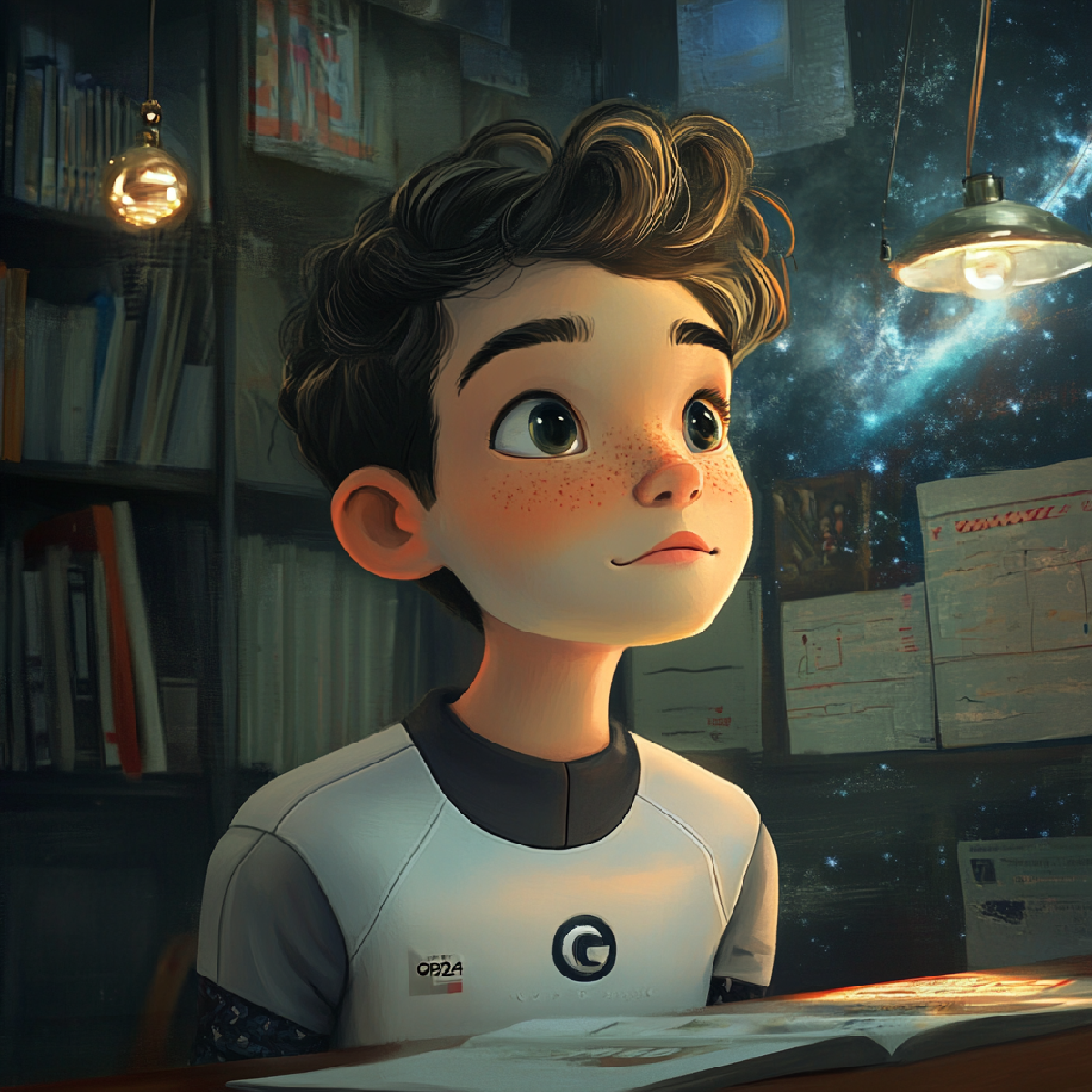

Quippy looking back at 2024 through Midjourney
We are approaching the end of 2024 — a good moment to reflect on a year full of personal milestones and significant developments in the Generative AI domain. 2024 was an interesting year if you are in the Generative AI (GenAI) domain. I continued fine-tuning my ideas around Retrieval-Augmented Generation (RAG). Daniël and I were accepted to give our workshop at JFokus in Stockholm. That was cool. After giving the workshop a few times using Langchain and Langchain4j, I decided to take another approach. I created a new open-source framework to assist the workshops. At the beginning of the year, I launched Rag4p and Rag4j, frameworks designed to simplify RAG workflows and provide tools for better demonstrations and hands-on experiences during workshops. We got good feedback and continued improving the framework.
The next stop was Technation. With Daniël, I conducted the second run of the workshop using the Rag4j and Rag4p frameworks. Again, it was a great success, with very positive feedback. It’s time to take it one step further. I decided to create a GUI utilizing the framework, which helped me demonstrate the key concepts of RAG more interactively. The GUI allowed me to visually showcase chunking, embedding, and prompting in real-time, making the ideas more tangible for the audience. The feedback was positive; participants found the hands-on demonstration more engaging and effective than traditional slides. I was invited to do a talk at the Haarlem meetup, where I presented without slides. Using the GUI and the Rag4p framework, I could demo all the concepts like chunking, embedding, prompting, and quality of LLMs. That was fun to do.
At the beginning of the year, I was involved with a newsletter called Index. Julie Mills approached me to contribute to it. Index is a roundup of content, research, and talks for engineers building search and AI applications. After three newsletters, the company Julie worked for was acquired, which shifted its priorities away from the newsletter. Therefore, we stopped working on the newsletter.
Later in the year, I joined Nico to give a workshop at the Axonic conference. Returning to a conference centred around the Axon framework is always fun. Being part of its inception 15 years ago makes it feel like coming home. Together, we ran the workshop The Beauty of Events: Embrace Asynchrony to Build for a Dynamic World.
After the summer break, I got some good news: our workshop was accepted for JFall. It’s always lovely to return after some years of absence to the conference where it all started for me. We revamped the workshop significantly, focusing more on following along than programming yourself. We did very well based on the feedback — 4.8 out of 5.
Something completely different was the free coffee chats initiated by Frédéric Harper. I was introduced to it by Doug Turnbull. It’s a fun way to talk to people in the field with no obligations — just a chat about topics one of the speakers is curious about. There was no commercial talk, just pleasant conversations. Over the year, I talked to almost 10 people through this list, which was a delightful experience.
In August, I completed the AWS Cloud Quest: Generative AI. Learning about different AWS technologies for working with Generative AI was a time-intensive track. I earned the badge but wanted more. So, I started working on a new project to create a demo leveraging multiple AWS technologies. Using CDK, I deployed everything to AWS. I used Bedrock for Large Language Models and Agent access and DynamoDB for storage. The result was a tool called Quippy. It was a great exercise — the best way to learn about these technologies.
Another significant milestone for me was developing a training program called GenAI: It’s Happening Now. I created this training for our Accelerate program to build our next tech leaders. I conducted the training twice, with each session lasting around four hours. Starting with exploring machine learning through linear regression and ending with GenAI via Large Language Models, we also discussed topics like security and ethics. It was a gratifying session to lead, and the feedback was very positive. I hope to do it more often — I enjoyed it.
Throughout the year, I wrote 18 blog posts on jettro.dev. These were cross-posted on my employer’s blog at luminis.eu. The topics included GenAI, RAG, LLMs, DSPy, and search-related content. Writing continues to be one of the best ways to store and share knowledge.
That’s it for this year — a lot has happened. Next year will be all about agents. Expect more posts around agents and perhaps a workshop too. I’m looking forward to new opportunities to speak at conferences and meetups.
Thank you for reading my content. I hope you found it insightful. See you in the new year!
References #
Conferences / Training / Workshop #
- JFokus — Hands-on-lab: Creating a Semantic Search-Based Question-Answering System with LLMs
- Technation — The Art of Questions: Creating a Semantic Search-Based Question-Answering System with LLMs.
- Meetup Haarlem — Gen AI needs high-quality and performant search
- Axonic — Workshop: The beauty of events: Embrace asynchrony to build for a dynamic world
- JFall — Build the best knowledge retriever for your Large Language Model
- Free coffee chat — https://github.com/fharper/coffeechat (Frédéric Harper)
Blogs / Content #
- jettro.dev — https://jettro.dev
- Luminis — https://luminis.eu
- Rag4p/Rag4j — https://rag4j.org
- Quippy.online — https://quippy.online
- Index Roundup — Newsletter
Books #
- Dit wil je écht niet weten (Huib Modderkolk)
- What it takes (Sarina Wiegman)
- Generative AI (Musiol)
- Introduction to generative AI (Numa Dhamani and Maggie Engler)
- Ik ga leven (Lale Gül)
- Supremacy — AI, ChatGPT and the Race That Will Change the World (Parmy Olson)
- Je suis Ahmed — De Rotterdamse jaren van Aboutaleb (Peter Groenendijk)